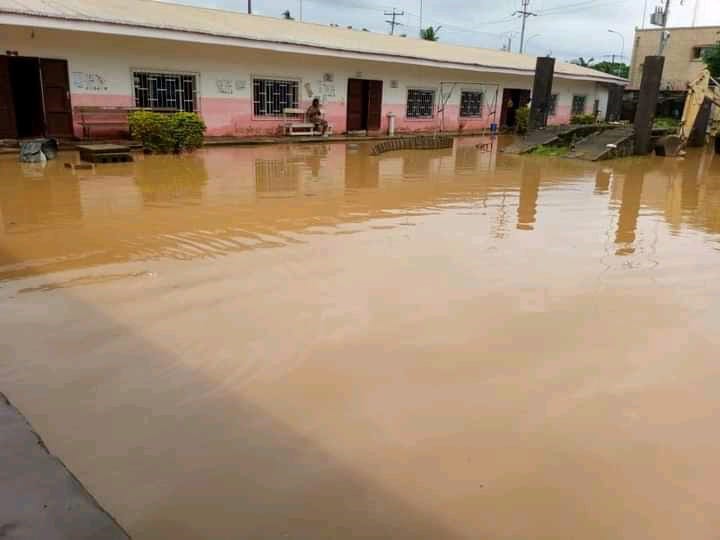
The Rising Waters: Why We Must Rebuild Our Relationship With Nature Before It's Too Late
For the past several days, our news feeds and television screens have been dominated by a singular, tragic sight: floodwaters swallowing our cities. From the bustling streets of Douala to the hills of Bamenda, we have watched families flee their homes and emergency services struggle against the relentless surge of water.
The recent devastation in Sissia Quarters, Bamenda, where families tragically lost children to rain runoffs, strikes a particularly painful chord. To every father, mother, and sibling mourning a loss, we extend our deepest and most sincere condolences. We grieve with you.
But as we wipe away our tears, we must ask ourselves a hard question: Why does this keep happening?
The answer, uncomfortable as it may be, lies in the mirror.
The Illusion of Conquest
There is a dangerous misconception that civilization is synonymous with conquering nature. We look at a forest and see only lumber. We look at a valley and see only a plot for construction. We look at a river and see only a dumping ground.
We were not born to subdue the earth in a violent takeover; we were placed here to be its stewards. For generations, we have operated with a "take, take, take" mentality, forgetting that we are utterly dependent on the very ecosystems we are destroying.
When we cut down trees recklessly for firewood or construction, we strip the soil of its ability to absorb water. When we build houses without drainage plans, we are essentially building traps for ourselves. When we dispose of garbage in gutters and along roadsides, we are damming the natural pathways of water.
We have not learned to live in harmony with nature, and so, when the rains come, nature does not welcome us—it fights back.
The Blame Game Must End
There is a cultural reflex we must break. When disaster strikes, we are quick to call on God, or look for a scapegoat—often blaming "village people," ancestral curses, or supernatural forces for our misfortune.
But is it God’s fault that we built a house in a riverbed? Is it a curse that our drains are clogged with plastic bags we threw there ourselves?
Our spirituality and our practical actions must align. Faith without works is dead, and prayer without responsibility is just noise. We cannot ask God to save us from a flood we invited through our own negligence. The cycle of disaster, sorrow, blame, and inaction is a loop we must break—immediately.
What “Doing Better” Actually Looks Like
Conscientisation is not just about feeling sorry; it is about changing behavior. Here is what we must do differently, starting today:
1. Mindful Construction:
Before you lay a foundation, consult the topography. Leave space for water to flow. Build with drainage in mind. We need to stop treating every available space as a “plot” and start treating it as part of a larger ecological system.
2. Proper Waste Management:
Stop using gutters as garbage bins. The plastic you throw away today will clog the drain and drown a child tomorrow. Let’s invest in community trash bins, recycling initiatives, and, most importantly, the discipline to use them.
3. Reforestation and Soil Conservation:
For every tree we cut down, let us plant two. Trees are not just aesthetic; they are our natural defense against erosion and flooding. We must teach our communities the value of preserving green belts.
4. Accountability:
Hold local authorities and urban planners accountable, but also hold yourself accountable. Change starts at the household level.
The Hard Truth: If Nature Dies, We Die
There is no alternative. There is no Planet B. The concrete jungles we are building will not sustain us if the natural jungles disappear. Civilization does not exist despite nature; it exists because of nature.
We are currently stuck in a vicious cycle of destruction and reaction. We act anyhow, and when disaster comes, we mourn, we blame, and we wait for the next rainy season to do the same thing all over again.
We have a choice. We can continue down this path of reckless behavior, or we can choose to become the generation that turned the tide.
A Call to Action
The floods of 2026 (and recent years) must be the final wake-up call. Let us not wait for another tragedy in Sissia Quarters, or anywhere else, to remember that our lives are intertwined with the health of our environment.
Let’s do better. Let’s build responsibly. Let’s dispose of waste with dignity. Let’s plant trees for our children.
Tomorrow’s safety depends on the actions we take today.
Have you experienced flooding in your area? What steps is your community taking to prevent future disasters? Share your thoughts and solutions in the comments below, and let’s work together to protect our town; Bamenda